
Matt Shumer’s February 9 AI article, Something Big is Happening, stayed with me. Not because of the hype. Not because of fear. But because of the speed of change he described.
The speed at which AI models are improving. The speed at which workflows are being compressed. The speed at which something that felt experimental a year ago now feels operational.
If you’ve been in business long enough, you’ve lived through inflection points before. The internet changed distribution. Cloud changed infrastructure. Mobile changed behavior.
This shift feels different. Not because of hype but because it is reshaping how intelligence is produced. These new AI models are not just automating tasks. They are learning, self-correcting, refining their outputs, and producing structured thinking at a scale that was once exclusively human.
My purpose with this piece, however, is not to speculate about percentages of job displacement. No one truly knows (not even the people inside the AI labs). What matters more is this: If AI is coming (and it is), how do we prepare?
Warren Buffett once said, “Predicting rain doesn’t count. Building arks does.” That feels appropriate here. The conversation about when is less important than what we are building today.
Because whether we like it or not, this is not a passing wave. It is closer to a tsunami. You cannot stop a tsunami. You cannot negotiate with it. But you can study it. You can prepare for it. You can build higher ground.
And preparation, in this moment, means building.
Building with AI. Building relationships. Building teams.
When I think about how to respond to this shift, I see three distinct audiences: the ambitious junior professional, the seasoned professional, and the team leader. Each faces a different responsibility. Each must build differently. But the underlying principle does not change.
Here are nine moves you can make, starting today, based on where you are in your career.
FOR THE AMBITIOUS JUNIOR PROFESSIONAL
Move 1: Ship Something
It is no longer enough to have good credentials and strong grades. It is no longer enough to say you are coachable and willing to learn.
After more than twenty years leading teams and over a decade in executive search, I have reviewed enough resumes to develop a sixth sense. You can tell who is coasting. And you can tell who is building.
When I sit across from early-career candidates now, I ask a different question: What have you built?
A few months ago, I talked to a young professional who had completed multiple AI certifications. The terminology was polished. The language was correct. But when I asked how those tools had been applied in a real setting, there wasn’t much to point to. .
Courses were taken. Videos were watched. Nothing had been shipped.
Shipping something changes the conversation.
Whether it is a micro-SaaS tool with 50 users, a job application tracker you built for yourself, or an industry briefing newsletter you publish weekly, execution speaks louder than intention.
Execution will be the differentiator.
Move 2: Lean Into What You Love and Go Deep
A few weeks ago, I met another candidate who approached AI very differently.
She loved video games. Not casually. Seriously. Instead of taking another certification, she decided to build one.
It was a simple adventure game set in a small town, where every decision the player made changed what happened next.
She used AI to help her build the game. It helped her shape the characters, write the dialogue, and test how the game would play. When something broke, she worked through it and rebuilt it. When the writing felt flat, she rewrote it until it felt real. She kept building.
The game was not perfect. It was not funded. It was not on the App Store.
But it was real. That’s Chispa, the human spark that separates one person from a hundred others who look the same on paper. It’s the difference between doing what is required and doing what you love.
More importantly, she had gone deep. She understood how the tool responded. She knew where it hallucinated. She knew how to refine prompts. She knew how to push it beyond basic output.
That told me more about her than any certificate ever could.
You do not need to master every tool.
Lean into something you genuinely enjoy. Something you are naturally curious about. Something you are already good at.
Then go deep, because depth builds confidence, confidence creates distinction, and distinction is what people remember.
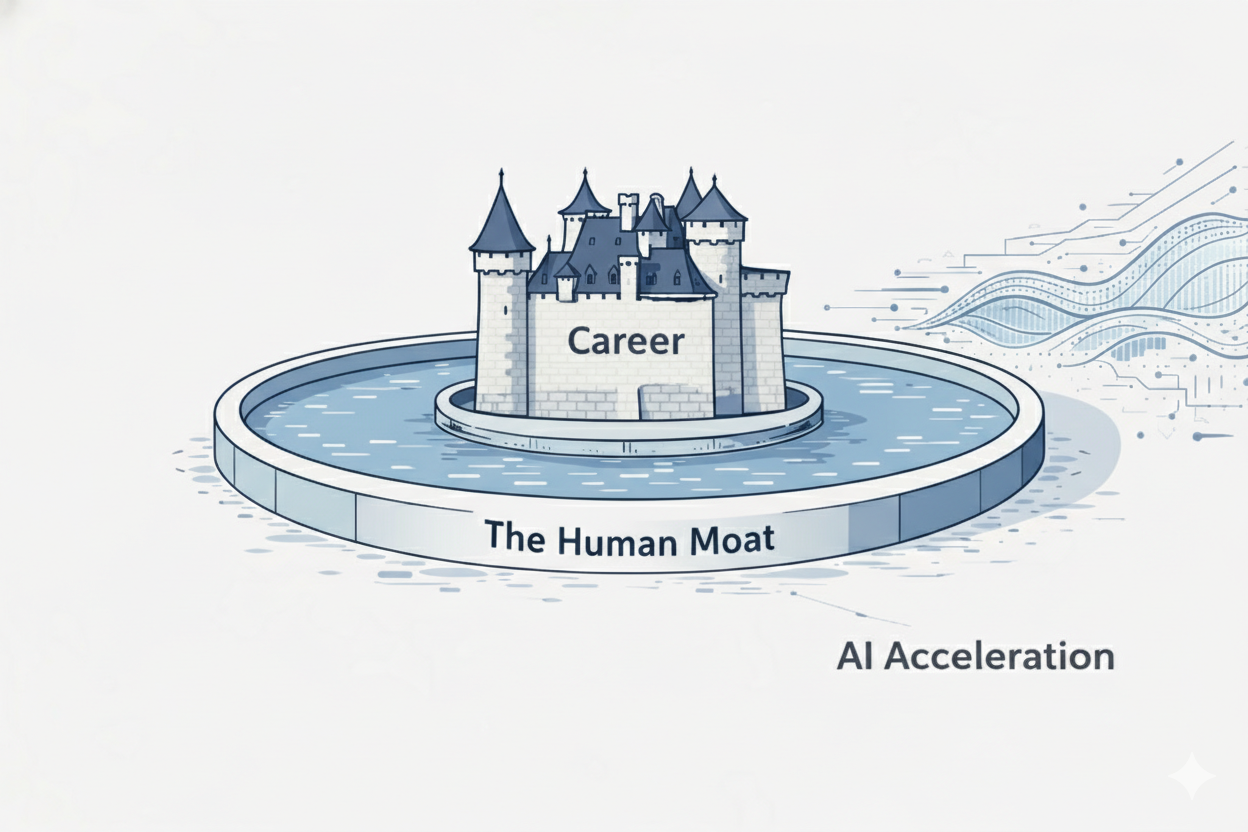
Move 3: Build Your Human Moat
Even shipping and going deep with a tool are not enough if your entire value proposition lives behind a screen.
The more analytical and isolated your role is, the more exposed it becomes to automation. Wherever a human adds alignment, persuasion, context, or trust, that is where the human advantage begins.
Build communication skills. Build empathy. Build relationships. Make it a priority to become effective with people.
AI can generate information. It cannot build trust.
That is your moat.
FOR THE SEASONED PROFESSIONAL
If you have spent ten or fifteen years building credibility and competence, your responsibility is different. You are not proving potential. You are protecting relevance.
Move 4: Continuously Experiment to Improve Your Workflow
Look at the workflows under your control. Forecast preparation. Weekly reporting. Client briefings.
Ask honestly: Can this be shortened? Can this be automated? Can this be enhanced with AI?
Consider two approaches.
One senior manager decides to build a full AI roadmap. There are slides, policies, risk plans, and long rollout timelines. It is careful. It is structured. It feels responsible.
At the same time, a director on the team decides to pick one recurring workflow and test it. One report. One forecasting process. One internal briefing. They experiment. They refine prompts. They measure results.
Three weeks later, which one has momentum?
The roadmap may still be in draft form. The experimenter already has proof.
In moments of acceleration, progress often comes from experimentation before perfection.
Move 5: Volunteer to Lead AI Adoption
Many organizations are experimenting with AI, but few are coordinating it.
The technology teams understand the tools. The business teams understand the outcomes. Very few people are comfortable in both worlds.
A seasoned professional is uniquely positioned to bridge that gap.
You understand the workflows. You understand the customers. You understand how decisions get made inside your organization.
Raise your hand.
Offer to pilot a practical use case. Lead a small working group. Document what works and what does not. Translate technical capability into business language.
You do not need a formal title.
You need initiative.
The person who connects AI experimentation to measurable business impact becomes a builder of the organization’s next chapter.
Move 6: Become the Human Connector
In The Tipping Point, Malcolm Gladwell describes the Connector as the person who links different worlds together. Not because they know many people, but because they know diverse people. They are the bridge.
AI can summarize information. It cannot build real relationships. It cannot earn trust.
The seasoned professional sits in the middle of the organization. Connect strategy to execution. Connect silos. Connect people.
In a world of automation, the connector becomes the Human Moat.
FOR THE TEAM LEADER
When a VP of Sales or a CRO asks me how to prepare for AI, my answer is practical.
Move 7: Do Not Delegate AI Understanding
Leadership cannot outsource understanding.
I once sat with a CRO who said quietly, “I’m not sure I understand this as much as my team does.” That gap creates distance. When he began using AI himself, running his forecasts through it, testing his assumptions, and reviewing pipeline risk, something changed. The conversations shifted. His confidence grew.
Leaders do not need to be technical experts. But they must be visibly engaged.
Use AI to review your executive memo before it goes out. Run your forecast through it and ask where it looks fragile. Let it challenge your assumptions.
If you never touch the tools yourself, your team will sense it.
Adoption does not start with policy. It starts with behavior.
Curiosity at the top becomes permission across the organization.
Move 8: Reskill Your Team Before Someone Else Does
If your team is not adopting AI and another leader’s team is, you will eventually be measured against that gap.
The market will not care about your intentions. It will care about output.
The best leaders are not standing still. They are helping their teams learn AI. They are adjusting how work flows. And they care about output, not just busyness.
This is not about sending everyone to a course. It is about embedding AI into daily execution. Encourage experimentation. Normalize iteration. Share improvements openly.
When your team feels capability increasing, confidence follows.
Reskilling your team signals something powerful. You are building the future, not managing the past.
And in this environment, that difference becomes visible quickly.
Move 9: Build Trust. Build Future Leaders
In the AI era, top performers multiply themselves. They use tools to extend their thinking, not just their output.
But technology alone does not create strength. Culture does.
Your team will quietly ask a simple question: What does this mean for me?
If fear fills that space, performance drops. If clarity fills that space, capability rises.
Communicate more, not less. Be honest about what is changing and what is staying the same. Show your team what strong performance looks like in this new reality. Encourage people to experiment. Lead with calm.
Insert AI into workflows deliberately. Build trust intentionally.
The leaders who thrive will not only adopt AI. They will build people who know how to use it wisely.
That is how you build the future.
THE BUILDER MINDSET
AI is accelerating. It is not slowing down. It will reshape roles.
But we are not passive observers.
We are builders.
The junior professional builds capability. The seasoned professional builds leverage. The leader builds systems, teams, and trust.
Different stages. Same responsibility.
There is an 88-year Harvard study on adult development. Across decades, recessions, wars, and technological revolutions, the conclusion was not money, not status, not productivity.
It was relationships.
Strong human relationships were the strongest predictor of longevity and well-being.
If relationships determine longevity in life, I believe they determine longevity in careers.
AI can increase intelligence. AI can increase speed. AI can increase output.
But relationships create trust. Trust creates opportunity. Opportunity creates staying power.
Build with AI, but at the same time build your Human Moat. Build trust. Build people. Build strong teams. That is how you build your future.
***
FEBRUARY BOOK RECOMMENDATION
If you want a fresh way to think about business this year, I recommend Steven Bartlett’s The Diary of a CEO. He is a young entrepreneur, but his thinking is sharp, modern, and practical.
Even if you have been in business for decades, this book will challenge you. It is not academic. It is not polished like a textbook. And that is exactly why it works. It reads like a real conversation, not a lecture.
The book touches on themes that matter at every stage of a career: mastery of self, mastery of mindset, mastery of communication, and mastery of leadership. These are timeless areas of growth.
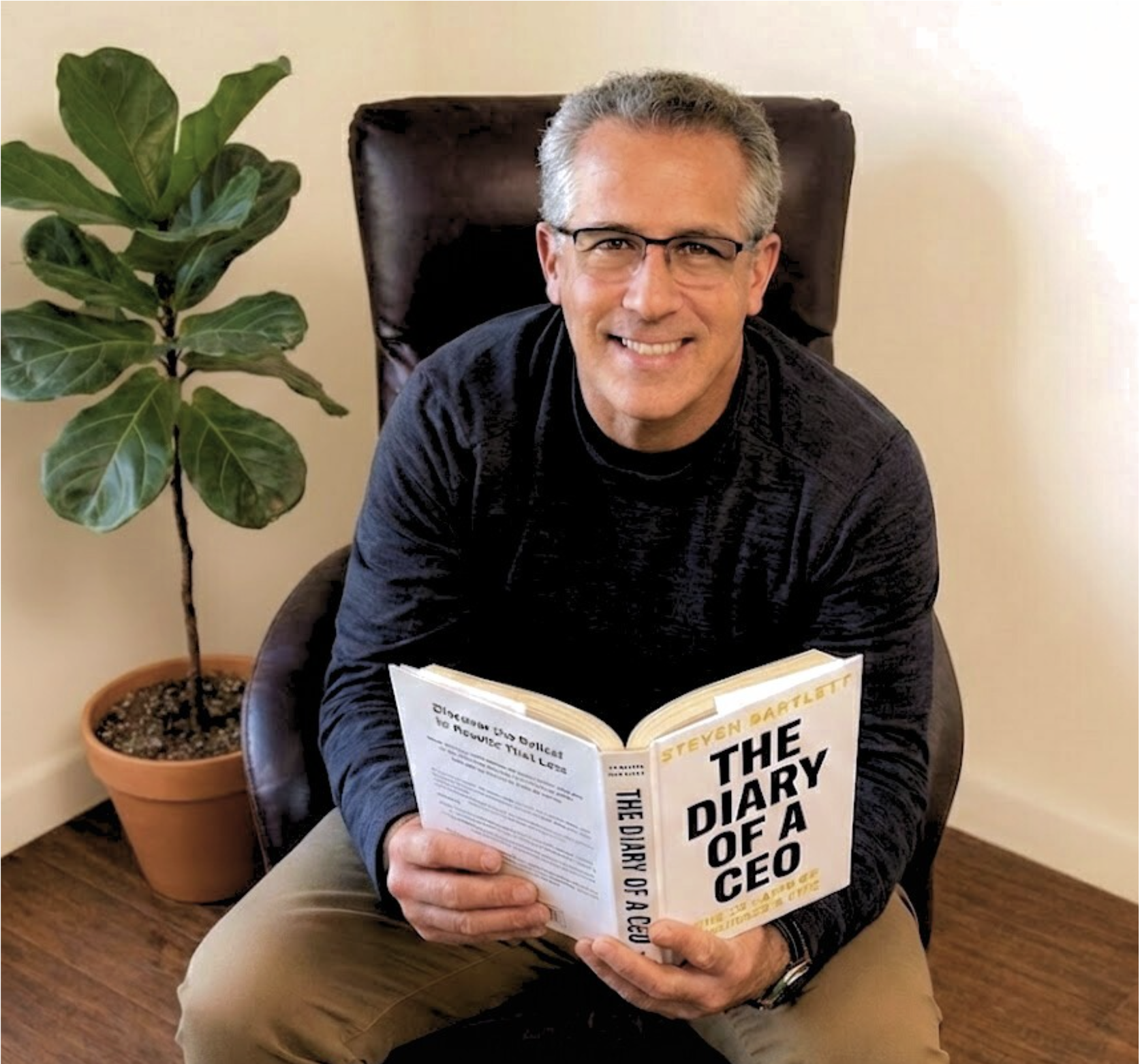
Steven also hosts a top-ranked podcast with the same name, currently one of the leading business podcasts in the U.S. A lot of the thinking in the book comes from the conversations he has had on that show. I actually recommend both reading the book and listening to the audiobook. Steven narrates it himself, and at times he includes clips from his podcast interviews. That makes the experience more dynamic and personal. It feels like you are part of the conversation.
There are 33 laws in the book, but two stood out to me. Law 19, You Must Sweat the Small Stuff, reminds us that small details often drive big results. And Law 26, Your Skills Are Worthless, but Your Context Is Valuable, explains that where and how you apply your skills matters as much as the skills themselves.
You do not have to agree with everything in the book. I did not. But it is thoughtful, honest, and worth your time.
***
A CLOSING THOUGHT
Matt Shumer’s article is not about panic. It is about speed. And speed requires awareness, not fear.
The conversation around AI often drifts toward job loss. I prefer to focus on what we can gain. Efficiency. Clarity. Better thinking. More time to build relationships and lead well.
Do not panic. Prepare.
Learn one tool. Strengthen one relationship. Improve one process.
Build with calm. Lead from the heart.
Keep building.
Luis Viloria
Founder and Managing Director
Search4Fit International





Responses