
A new year has a way of sharpening perspective.
Fresh goals are set. New roles are discussed. Headcount is approved.
On paper, everything looks clean and optimistic.
Leaders revisit budgets and hiring plans.
Professionals quietly reflect on what worked and what didn’t.
When new headcount opens up, hiring conversations are usually full of energy. There’s momentum. Excitement. A belief that this time the team will be stronger.
And yet, most hiring leaders have been here before.
They remember a hire from 2024 or 2025 that didn’t fully work out. Nothing catastrophic. Just expensive enough not to forget.
So, they come into the process feeling more prepared. More intentional.
Still, there’s uncertainty.
Not about effort.
About something harder to name.
The part of the process that looks fine on paper but reveals itself much later.
A Familiar Hiring Story
Let me introduce you to Elena.
Elena is a senior tech sales professional in the storage industry. An individual contributor.
She’s proven. Respected. Consistent.
Her résumé checks every box. Strong references. Clear results. Experience at a direct competitor.
The decision feels straightforward.
Early on, things look good. She delivers. She meets quota. No red flags.
And yet… something feels off.
Elena executes but hesitates to fully take ownership. She looks for direction in a role that quietly expects self-direction.
The team anticipated initiative. What they experienced was hesitation.
Nothing dramatic. Just enough friction to slow things down.
Here’s what was really happening.
In her previous role, Elena operated in a mature, well-resourced environment. Defined territory. Established demand. Strong, consistent sales engineering support.
The new company was different.
Earlier stage. Less structure. Inconsistent SE resources. A wide-open market that required building demand, not farming it.
The assumption was simple and very common:
Success in a direct competitor will translate naturally into the new company.
But the real gap wasn’t skill. Or effort.
It was alignment.
Elena thrived in structure. This role required comfort with ambiguity.
She had succeeded with hands-on leadership. This leadership team operated hands-off.
Her abilities were real. Her motivation was real.
The environment simply asked her to work in ways that didn’t match how she does her best work.
What failed wasn’t the hire.
It was clarity.
And clarity usually comes down to understanding three things.
The Three Buckets Behind Every Hiring Decision (AWA)
Over time, most hiring outcomes trace back to the same three elements.
At Search4Fit, we use a simple framework to make them visible:
Abilities
Want
Alignment
You might hear these called Can, Want, and Fit. Different words. Same idea.
Together, they explain why hires that look “right” often don’t work out over time.
I. Abilities (Can): Can this person do the job?
This is where most hiring processes start.
And often, where they stop.
Abilities include:
- Relevant experience
- Technical and functional skills
- Track record of performance (quota attainment, in Elena’s case)
- Measurable outcomes (new logos, renewals, expansions)
- Familiarity with customers, partners, or markets
To go deeper, ask questions like:
“Walk me through a recent deal you’re proud of. From first contact to close. Where did you personally create the most value?”
“In your last role, what parts of the sales process did you fully own, and where did you rely on others?”
Abilities answer an important question:
Is this person capable of doing the job?
But capability alone doesn’t guarantee long-term success.
II. Want: Is this person motivated and sufficiently challenged?
This bucket is often assumed rather than explored.
Want looks at:
- What’s motivating the move (Elena wanted out after leadership changes)
- Whether the role is genuinely challenging
- Interest in the problems the company is solving
- Connection to the mission
To surface this, ask:
“Over the last year or so, what kind of work gave you the most energy?”
“If you were still here in three years, what would need to be true for you to feel this was a great decision?”
Want answers a different question:
Will this person still be engaged once the initial excitement fades?
Because skills without motivation eventually erode.
III. Alignment (Fit): Will this person thrive here over time?
This is the most misunderstood and most decisive bucket.
Alignment includes:
- Company and team culture
- Leadership and management style
- Compensation structure and incentives
- Career path and learning opportunities
- Expectations around travel, commute, benefits, and work policy
To bring this to life, ask:
“Describe the environment where you’ve done your best work, leadership style, structure, support, and pace.”
“What would you need from leadership in the first year to do your best work here?”
Alignment answers the hardest question of all:
Is this a long-term match between the person and the organization?
Why alignment is the multiplier
Alignment doesn’t behave like a checklist.
It behaves like a multiplier.
Abilities × Want × Alignment = Long-Term Hiring Success
A candidate can be capable and motivated (The seed)
But if the environment and alignment (The soil) don’t support how they work and grow, performance slowly erodes.
Alignment doesn’t replace ability.
Alignment doesn’t compensate for motivation.
Alignment determines whether ability and motivation compound or erode.
When alignment is strong, people learn faster, stay engaged longer, and perform more consistently.

From “fit” to mutual fit
Fit is often evaluated in one direction:
Does the candidate fit us?
Sustainable hiring works differently.
At Search4Fit (yes, it’s literally in the name), we look at alignment as mutual.
Candidates are asking:
- Can I succeed here?
- Can I grow here?
- Can I make an impact?
- Can I be myself here?
Organizations should be asking:
- Can we support this person’s trajectory?
- Can we leverage their strengths?
- Are we the right environment, not just today, but over time?
When alignment is one-sided, friction is inevitable.
When it’s mutual, performance flows.
When AWA flows like "Agua."
There’s a reason this framework resonates beyond logic.
When Abilities, Want, and Alignment are present and balanced, hiring flows.
Smooth.
Natural.
Sustainable.
Like agua.
When one element is missing, pressure builds. Friction appears. Something eventually leaks.
Great hiring isn’t rigid.
It’s fluid.
And it starts with the kind of clarity Elena wished she’d had before accepting the offer.
A final reflection
As you build or join new teams this year, ask yourself:
- Are the Abilities truly there?
- Is the Want real?
- Is there genuine Alignment on both sides?
When AWA flows, success follows.
When it doesn’t, no amount of optimism can force it.
And here’s the irony: in an era where people worry about AI replacing human judgment, hiring remains deeply human at its core, especially for critical roles.
Mutual alignment can’t be reduced to a data point or an algorithm. It requires real conversations, honest expectations, and human insight.
That’s the part of hiring that no system can automate and the part that matters most.
***
January Book Recommendation
When pressure rises, how do you actually lead?
Not in theory.
Not on a slide.
But in the middle of a tense conversation, a missed number, or a decision you would rather avoid.
In our work with executives, professionals, and hiring leaders, we see a familiar pattern. As growth accelerates and uncertainty creeps in, even strong leaders slip into reactive mode. Blame shows up. Assumptions harden. Ownership fades. Not because people are careless, but because pressure has a way of pulling leaders below the line before they even notice.
That is why The 15 Commitments of Conscious Leadership has stayed with me.
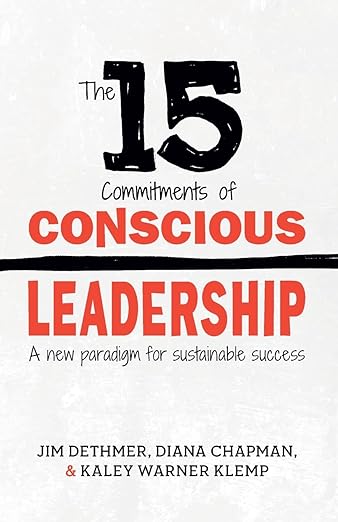
What makes this book different is not the theory. It is the language. The above-the-line vs. below-the-line model is incredibly simple, but it shows up exactly where leadership lives. Real conversations. Real decisions. Real accountability.
As leaders step into new challenges and chart their course for 2026, this is a grounded, practical read. One that helps leaders replace autopilot with clarity, ownership, and intention.
This year, I am committing to staying more above-the-line open, curious, and growth-minded.
How about you?
Here is a concise summary of the book: https://www.search4fit.com/Jan-book-summary
***
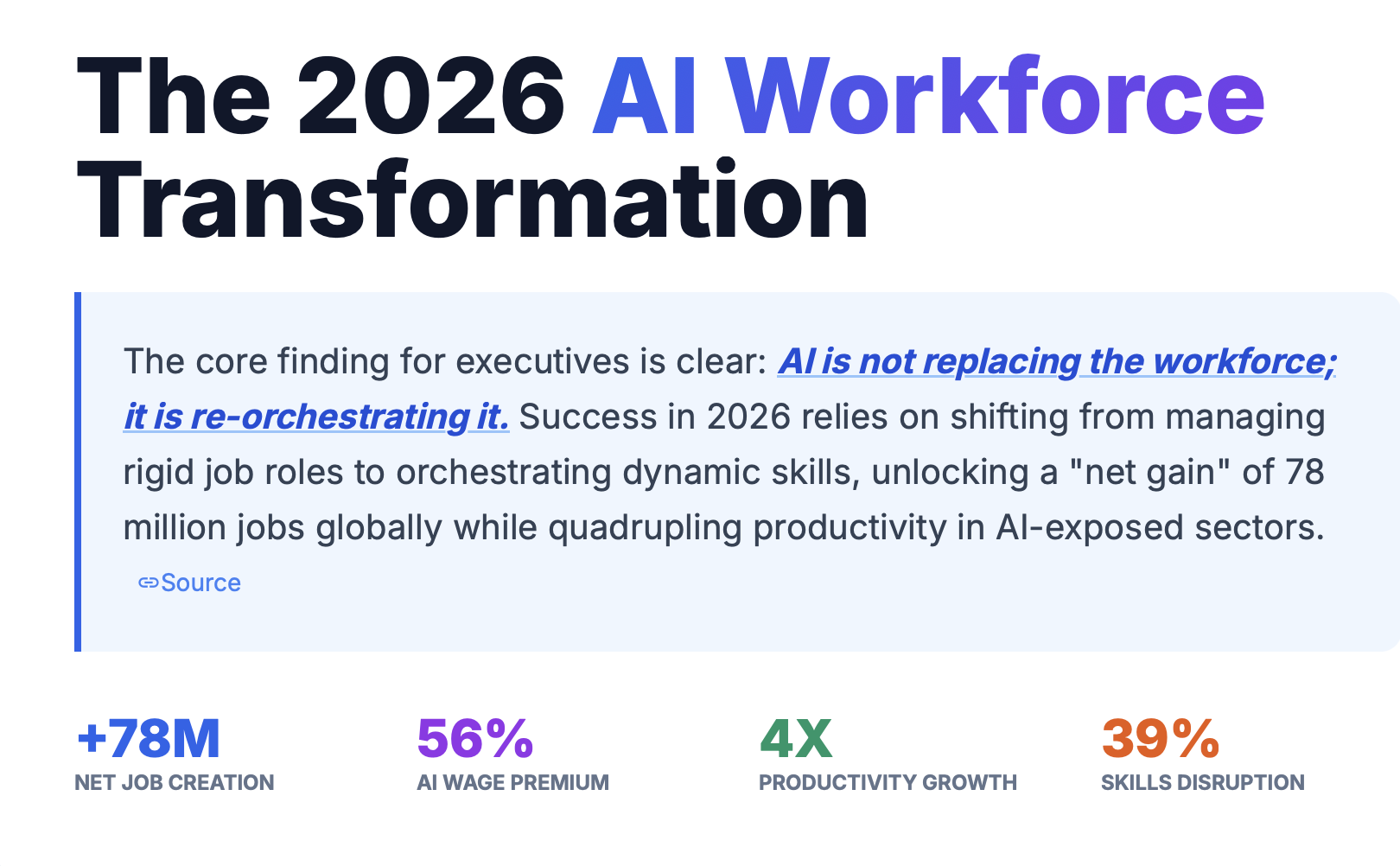
The 2026 Workforce Shift: AI, Skills, and Opportunity.
We are starting 2026 at a clear inflection point. The question is no longer whether AI will take jobs, but how work and workflows are changing right now. This piece from Gloat highlights important trends in how organizations are embedding AI into everyday workflows and redefining roles as the year begins. For hiring leaders, it signals the need to rethink skills and team design early. For career professionals, it points to where adaptation matters most. According to PwC, AI-skilled workers already command up to 56 percent higher wages. This is a 2026 reality, not a distant forecast.
If you want to explore this further:
- Read the full Gloat Article: https://gloat.com/blog/ai-workforce-trends/
- Curated summary landing page: https://gemini.google.com/share/777249e21bc4
***
A Closing Thought
January is not about speed.
It is about direction.
The strongest teams and careers do not begin the year with perfect answers. They begin by asking better questions earlier than last time.
As the year unfolds, we will continue exploring what clarity, alignment, and long-term success truly look like in hiring, leadership, and careers.
Thank you for reading, and for being part of this first edition.
Luis Viloria
Founder and Managing Director
Search4Fit International





Responses