
The Sunday Night Test
A successful pop star leaves fame at the peak of his career and spends six months walking alone across America. Not because he failed. Because the life he had built no longer felt like it belonged to him.
A successful lawyer leaves a high-paying career and becomes an elementary school teacher. Not because she failed. Because she was missing too much of her children growing up and knew her job was never going to change.
Two different people. Two different professions. Two different lives.
The same question for both.
Is this still what I want?
I know that question well.
For twenty-four years, I built a corporate career across different countries and markets. On paper, it looked like success. Big technology companies. Constant travel. Large revenue responsibility. Teams built from the ground up in different geographies.
And the truth is, I was good at it.
But deep down, the same quiet question was always there. Not loud. Not urgent. Just a low, constant hum that slowly became impossible to tune out.
I left corporate America in 2015 to found Search4Fit International. The truth is, I was no longer growing. The work was still good. The people were good. But deep down, it felt like I was repeating the same chapter over and over again. One more flight. One more meeting. One more quarter inside a world that did not represent who I was becoming.
I wanted more. More creativity. More control. More direct impact on the people I worked with and the companies I helped build. I wanted to wake up and feel the full range of what I was capable of, not just the functional slice that fit inside a giant corporation.
That decision was not made in a crisis. It was made on a quiet Sunday evening when I finally let myself finish the question I had been asking for years.
This is what this article is about. It is not about a sudden career change, a low point, or extreme exhaustion. Instead, it explores the quiet Sunday evening question that successful people delay until someday. It shows why someday is the most dangerous word in a life of purpose.
Two Frameworks That Resonated Most
Over the years, I have come across many ideas about purpose. Some are helpful. Some are too academic. Some sound great until real life and Monday morning show up.
In my work as a leader, recruiter, and coach, I have sat with many people during the most honest moments of their lives. Two frameworks resonated with me more than any others. Time after time, they are the ones that bring light to the conversations that matter. One comes from Japan. The other comes from a TED talk that became one of the most popular in history.
Both are complete and powerful on their own. The goal is not the framework. The goal is the question it helps you answer. Pick the one that fits where you are right now. Use it honestly. And keep digging.
Ikigai: The Personal Journey
Where your personal reason for being lives.
Most people know Ikigai as a diagram. What gets lost in translation is that the Japanese original is a philosophy of living long and well, rooted in daily habits, not just a career exercise.
In practice, it operates at the intersection of four questions. What do you love? What are you genuinely good at? What does the world actually need? And what can you be paid for?
Two of those four questions are purely professional. What you are good at is a performance question. What you can get paid for is a market value question. Every serious leader thinks about both constantly. And yet Ikigai insists you cannot answer them in isolation from the other two. Because the two circles you are ignoring are the ones that determine whether you can sustain the other two long term.
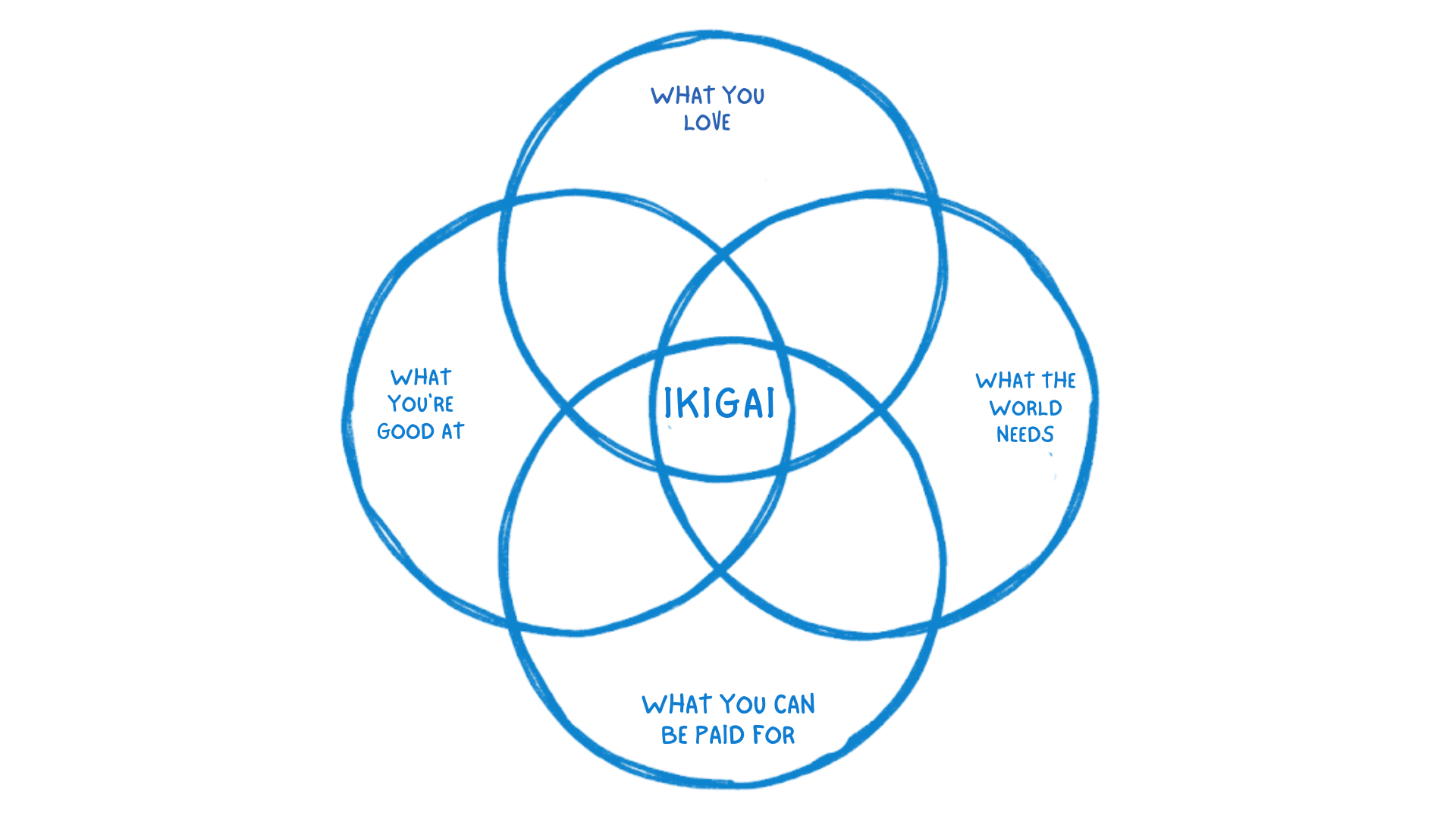
I know because I lived that gap. For years I had two of the four circles working well. I was skilled and I was paid. And yet the love and the belief in what I was contributing had quietly started to fade. I could not name the feeling back then. I simply watched it grow over time.
The truth is, most of us drift slowly, not dramatically. That is why Ikigai matters. Not as a diagram on a wall, but as a regular and honest pause to ask yourself if the life you are building still feels like your own. If you have never mapped yourself honestly against these four questions, start here.
Starting With Why: The Leadership Journey
Where your leadership clarity lives.
Around the same time Ikigai entered business conversations in the West, Simon Sinek asked a powerful question that challenged a lot of leaders.
Why do you do what you do?
Not what you do. Not how you do it. Why.
Simon Sinek’s idea, called The Golden Circle, starts with a simple belief: great leaders begin with why. Most people talk first about what they do and then explain how they do it. Very few explain why they do it in the first place. But the leaders who build trust, attract the right people, and create lasting momentum usually start with purpose. They start with why.
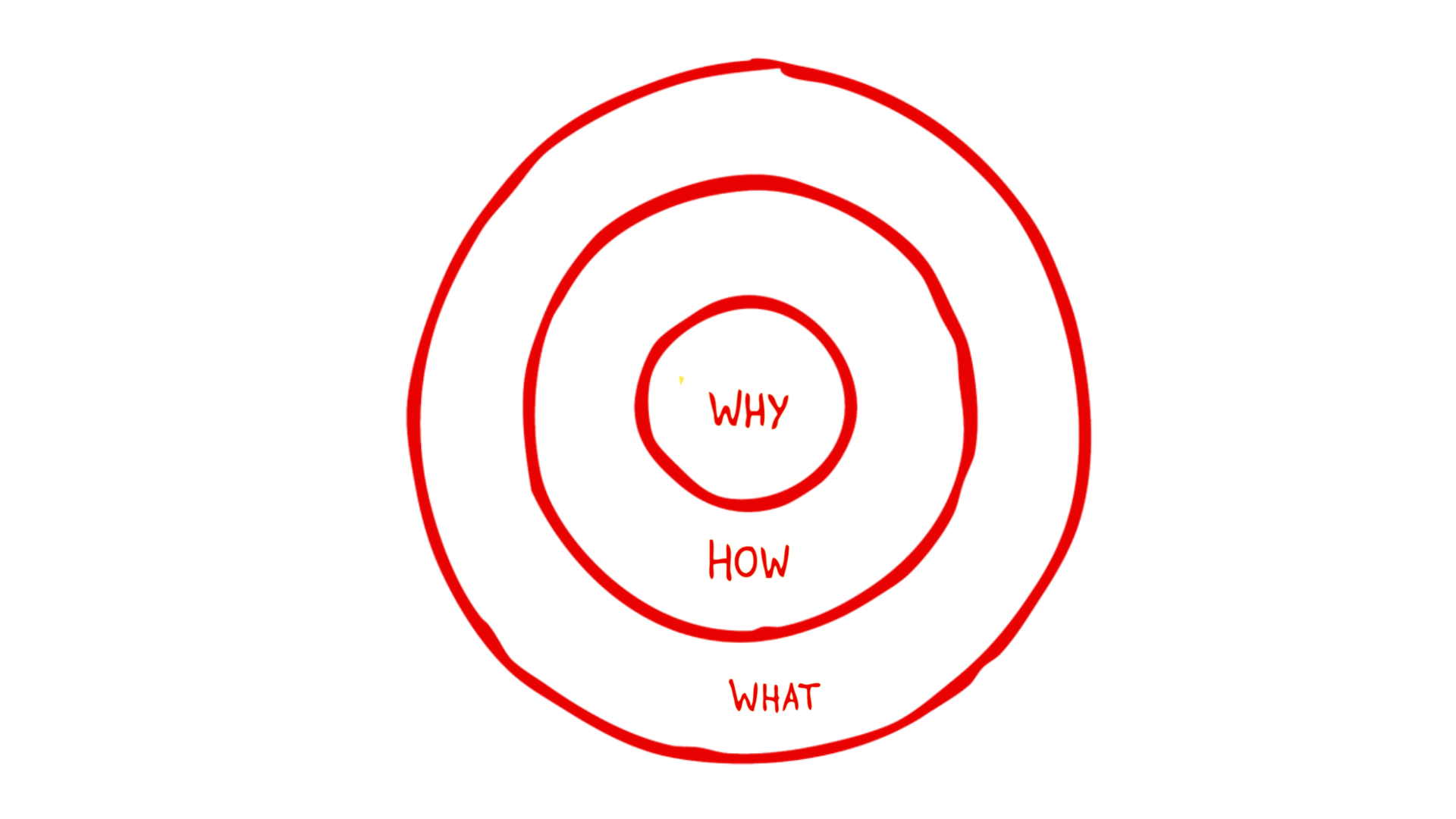
A Why built purely around personal ambition has a ceiling. In contrast, a Why rooted in contribution and impact keeps compounding. Because people do not follow titles. They follow belief.
If you have a strong sense of who you are and what drives you personally, but struggle to translate that into how you lead and communicate at work, this is where to start.
Why I Call It Iki-Why
Where both converge into one driving force.
These two models are not competing. They are not trying to solve the same problem. And neither one is incomplete without the other.
Ikigai, at its core, is a philosophy. A deeply Japanese way of living that existed long before anyone drew a diagram around it. It is personal, holistic, and rooted in the long game. The Venn diagram that most people associate with Ikigai is actually a Western interpretation, a visual bridge that made the philosophy more accessible to a global business audience. It is useful. But it is not the original.
Starting With Why, on the other hand, is a leadership and organizational model. It takes a deeply personal question and projects it outward into teams, organizations, and markets. It is about what you stand for and why anyone else should care.
When I looked at both together, something became clear.
The Ikigai Venn diagram and the Golden Circle are not that far apart. Both are trying to map the same territory from different angles. The Venn diagram asks where is your intersection. The Golden Circle asks what is your center. One is personal. One is professional. But they are asking versions of the same question.
Iki-Why is what happens when you decide to answer both at the same time.
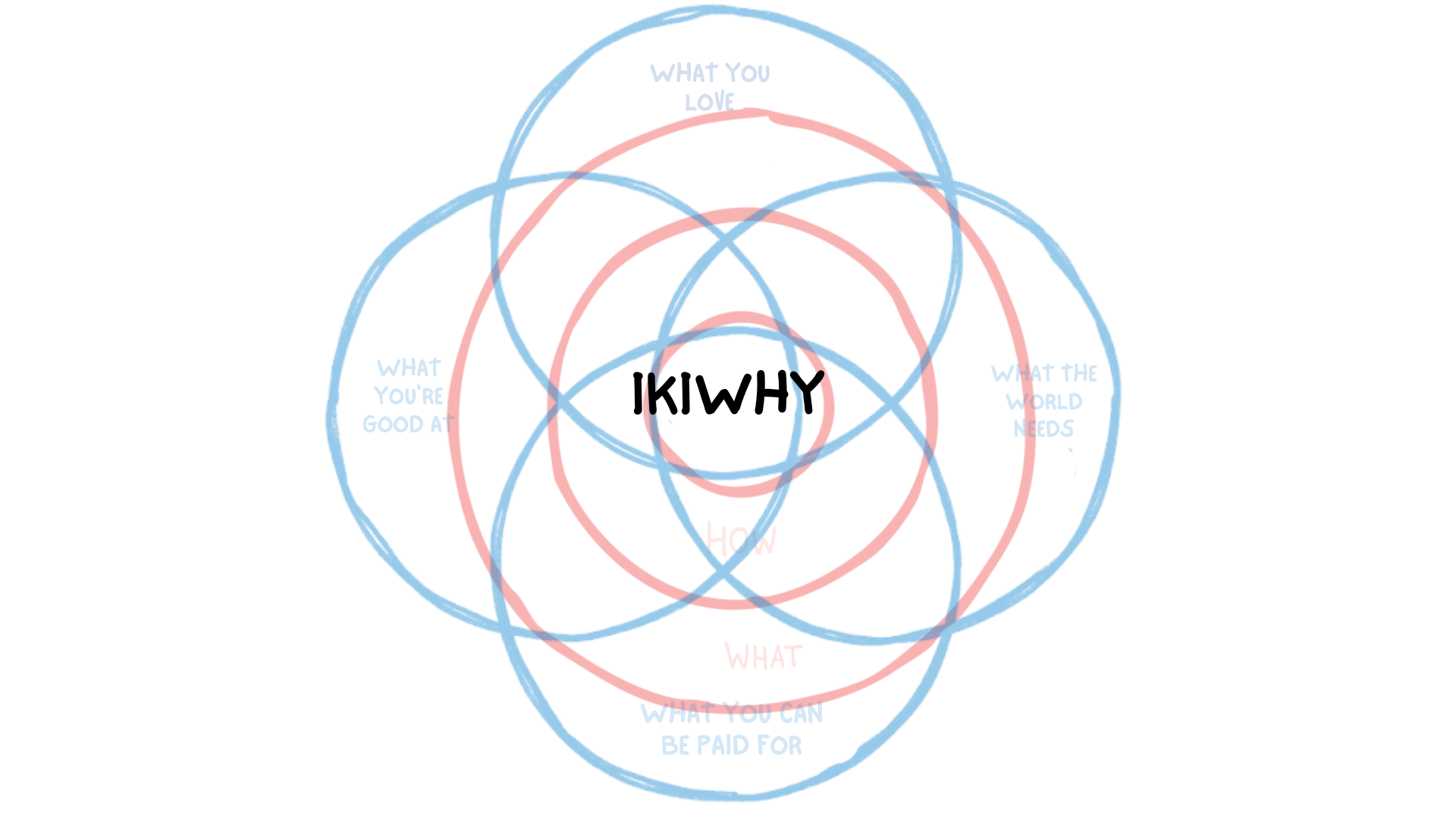
Not a new framework built on top of two existing ones. More a practice of honoring both dimensions at the same time. The personal and the professional. The life you want to live and the reason behind the work you do.
When those two things converge at the center, you stop showing up to perform and start showing up to contribute. Your team feels the difference before you say a word.
The Checkup You Keep Skipping
The pop star fills stadiums. The lawyer bills six figures. And you keep delivering because the results are real and the recognition matters. None of that is wrong. In fact, all of it is real.
And yet, you can achieve everything you once wanted and still feel like something is missing. It is a bit like skipping a medical checkup. Nothing feels seriously wrong, so life moves on and the appointment keeps getting pushed. Purpose works the same way. The disconnect builds quietly over time. In the meetings you no longer look forward to, and in the growing gap between the person you are becoming and the life you really want to live.
I lost a close friend this year. She was 61. Loving, warm, full of life. She skipped a few checkups over the years, just the quiet postponement that busy people normalize. By the time something felt wrong enough to act on, the options that had existed a few years earlier were no longer on the table. A little over a year later, she passed away.
The two situations are obviously very different. One is about health and life itself. The other is about purpose and fulfillment. But the pattern underneath them feels similar. In both cases, the warning signs usually begin quietly, long before people decide to act.
Sadly, some people run out of time and the window closes. That is what happened to my friend. But for most of us, the doors are still open. The pop star and the lawyer chose to face those quiet symptoms while they still had the freedom to make a change.
Do not wait until the symptoms get loud. Listen to the quiet whispers, and give yourself the honest checkup you need today.
Go Live Your Iki-Why
One of my favorite quotes on purpose comes from Steve Jobs.
"For the past 33 years, I have looked in the mirror every morning and asked myself: if today were the last day of my life, would I want to do what I am about to do today? And whenever the answer has been no for too many days in a row, I know I need to change something."
He did not wait for Sunday evening. He asked it every morning.
Most of us are not that disciplined. Some ask it once a year. Most wait until the discomfort gets too loud to ignore. A few wait until it is too late.
This is not about walking away from everything you have built. The pop star kept his love for music, and the lawyer protected her time with her family. Recalibration is not about throwing your life away. It is about honesty.
For leaders of organizations, the people you want on your team are the ones who have answered the Sunday Night question and chosen to stay. Iki-Why centered professionals do not disengage. They invest.
I use Ikigai to check whether I am still centered. I use Starting With Why to make sure what I do still serves others. I use both to make sure the person I am and the leader I want to be are still the same person.
For all of us, individually and as leaders, the answer starts with one honest question.
Ask the question now, not someday.
Because someday is the most dangerous word in a life of purpose.
The pop star, the lawyer, and I did not ask the question because we had nothing to lose. We asked it because we knew the price of silence was too high.
That window does not stay open forever.
It is Sunday evening.
You know the feeling.
The question is already there. It has always been there.
Is this the life you actually chose?
If you have to think about it, that is your answer.
Want to go deeper?
If this article resonated and you want to explore both frameworks more fully, I recommend two books.
For the personal journey, read Ikigai by Héctor García and Francesc Miralles. It goes beyond the diagram and into the philosophy of living a long, meaningful, and engaged life.
For the leadership journey, read Start With Why by Simon Sinek. It will help you articulate your purpose in a way that moves people.
With both books, you will have everything you need to begin your own Iki-Why practice.
***
📕 MAY BOOK RECOMMENDATION
This month I recommend Unreasonable Hospitality.This book quietly reinforces something I have seen throughout my career: people remember how you made them feel.
Although the book takes place in the world of fine dining and New York restaurants, it is really a book about people, listening, and creating memorable experiences through thoughtful attention.
In the book, Will Guidara shares how he helped transform Eleven Madison Park from a struggling brasserie into the number one restaurant in the world, not simply through great food, but through extraordinary care for people.
One story especially stood out to me. Will overheard guests saying they had experienced almost everything in New York except eating a street hot dog. Instead of ignoring the comment, he quietly went outside, bought a hot dog from a street vendor, and served it as part of the dining experience.
That moment captured the philosophy of the book for me.
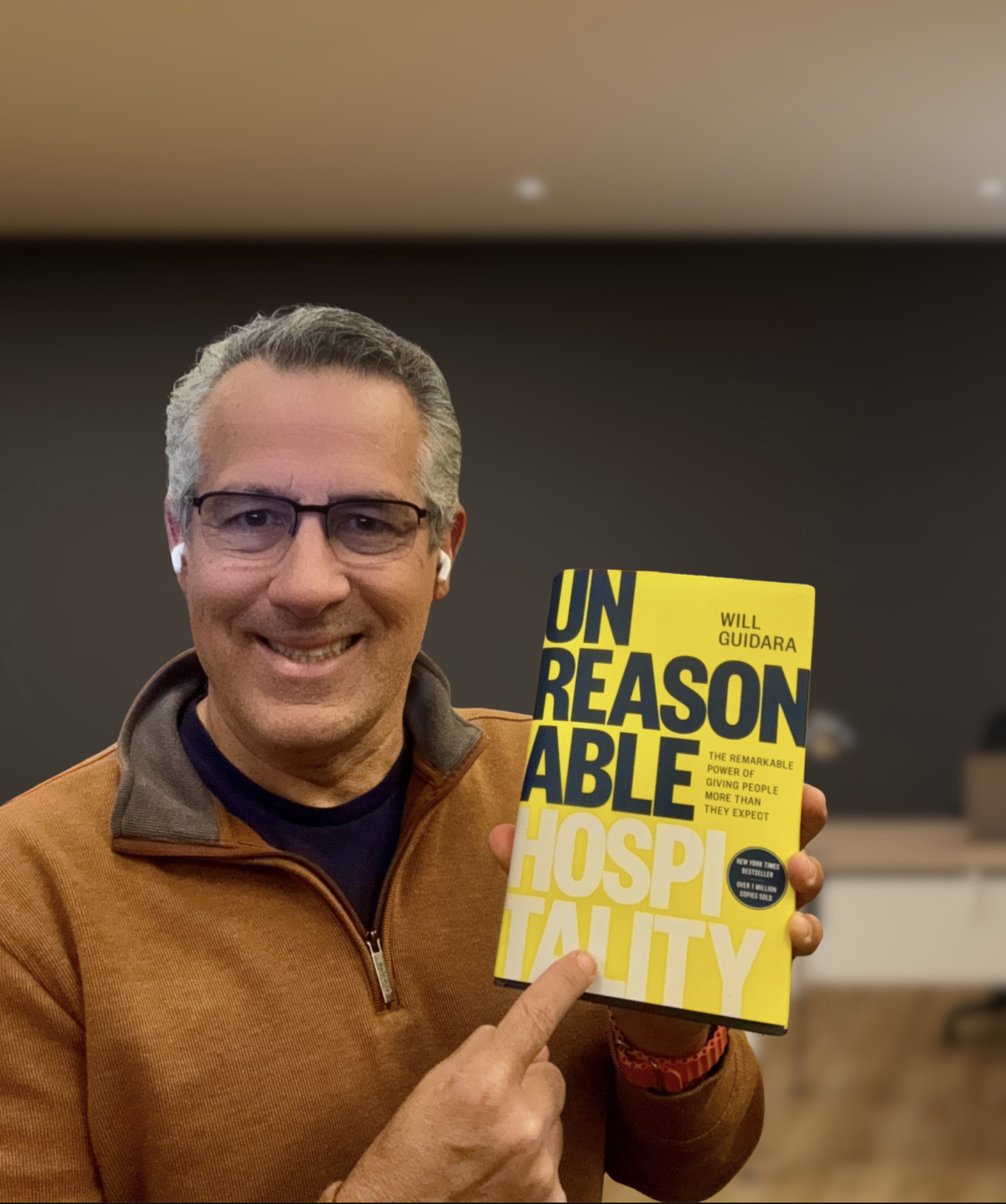
Unreasonable hospitality is not about luxury. It is about listening carefully enough to notice what matters to someone and caring enough to do something about it.
Reading this made me think about my own work at Search4Fit International. In executive recruiting, the best insights come from listening to both sides of the table. It means hearing what candidates are truly searching for in their lives, and understanding the clients who live and breathe their company culture every day.
That is why I recommend this book. It is a simple reminder that thoughtful attention and genuine care still matter more than most people realize.
***
🔧 TOOL OF THE MONTH
Purposeful leadership also means staying ahead of what is coming. And something big is coming in just a few days.
This month I want to share a simple tool we built around the upcoming 2026 FIFA World Cup.
While most people are thinking about matches, predictions, and travel, many business leaders are about to experience something else: a major shift in productivity, schedules, meetings, and attention across teams and global markets.
That is why we created the World Cup 2026 Calendar Tool.
It is a simple way to track all 104 matches across the tournament and anticipate how the event may impact your business, employees, customers, partners, and even your own schedule.
Sometimes major business disruptions are not caused by crises.
Sometimes they are caused by moments the entire world wants to experience together.
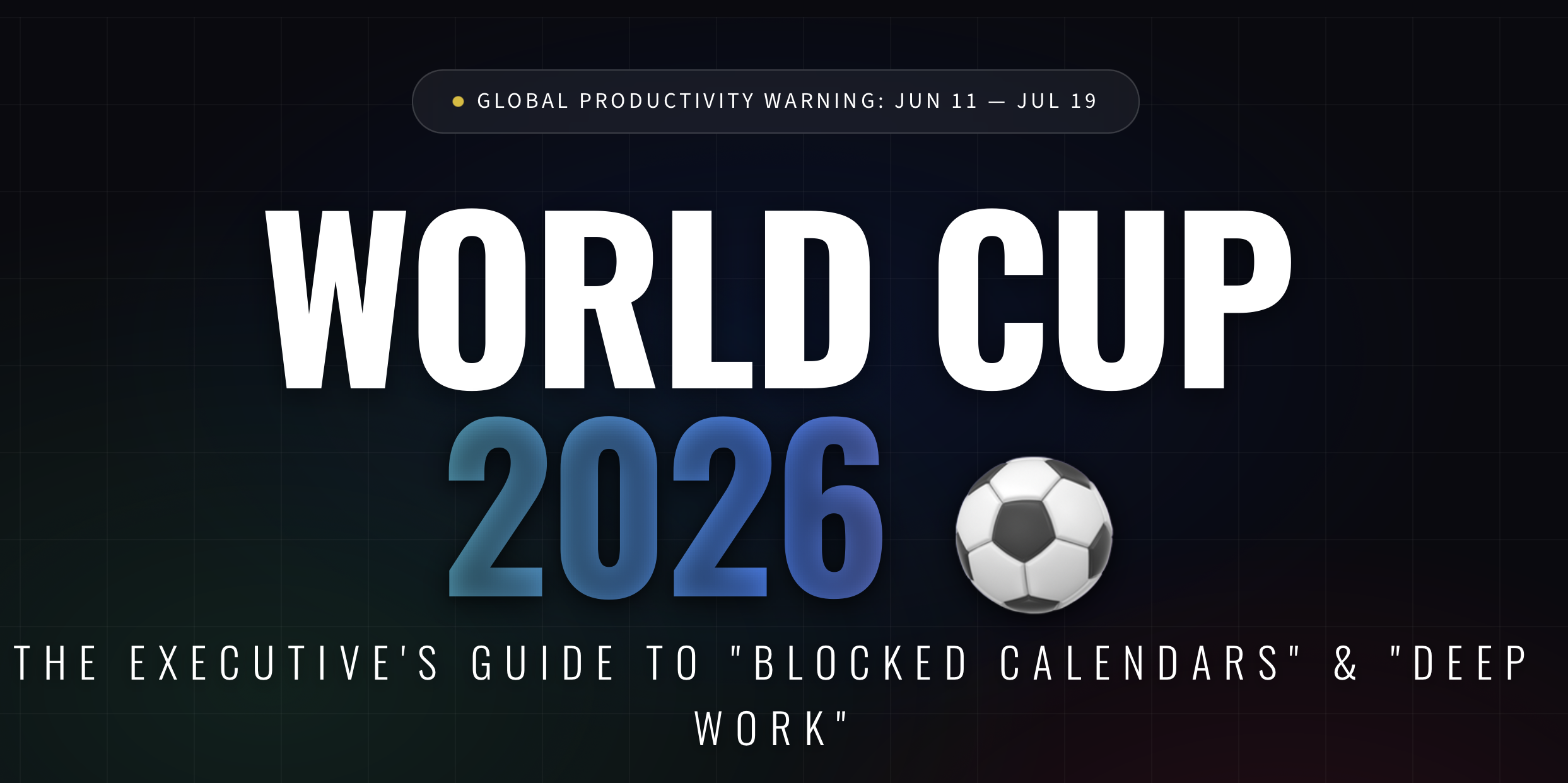
You can explore the World Cup 2026 Calendar Tool here:
👉 World Cup 2026 Calendar Tool https://www.search4fit.com/World-Cup-2026
Like many things, preparation creates advantage.
This is simply a practical way to stay one step ahead while still enjoying the excitement of the tournament.
***
A CLOSING THOUGHT
True recalibration does not happen in loud, dramatic moments, but in quiet, honest pauses.
Do not wait for the next promotion, the next season, or for someday to check in with yourself.
Have the courage to ask the question tonight, and take one small step toward the life you actually chose.
After all, professionals who are honest and centered within themselves are exactly what great organizations truly need.
Luis Viloria
Founder and Managing Director
Search4Fit International





Responses